Why Most People Never Really Choose Their Life
Here is a question that might sting a little. When was the last time you made a truly conscious decision about how you spend your days? Not picking a restaurant or choosing what to watch on Netflix. A real, deliberate choice about the direction of your entire life.
If you are being honest, the answer might be "a while ago." And you are not alone. Most people drift through life on autopilot, reacting to whatever lands in their inbox, their social feed, or their boss's latest request. Days blur into weeks. Weeks blur into years. And one morning you wake up wondering how you ended up here.
This is not a moral failure. It is a design problem. Our brains are wired to conserve energy, which means defaulting to familiar routines, avoiding hard decisions, and following the path of least resistance. Evolution optimized us for survival, not for fulfillment.
Intentional living is the antidote. It is the practice of designing your life around what actually matters to you. Not what society, social media, or your well-meaning parents think should matter. It is about making conscious choices instead of unconscious defaults.
In this guide, we are going to break down the core principles that make intentional living possible. These are not fluffy self-help platitudes. They are battle-tested mental models drawn from physics, systems theory, economics, and behavioral science. Each one gives you a different lens to see your life more clearly, and a practical tool to reshape it.
What Intentional Living Actually Means
Let us get specific, because "intentional living" can sound like the kind of vague advice you would find on a motivational poster. It is not about meditating on a mountaintop or journaling for three hours every morning.
Intentional living means making decisions based on your values and priorities, rather than habits, social pressure, or default options. It means regularly asking yourself a simple question: "Is this what I actually want, or is this just what I have always done?"
Think of it like driving a car. Most people are in the passenger seat of their own lives. They give occasional directions, but mostly they just go wherever the car takes them. Intentional living means grabbing the steering wheel, setting the GPS, and choosing your route with full awareness of where you are headed.
This does not mean controlling every minute of your day. That is a recipe for burnout. It means having clear principles that guide your decisions so that even when life gets chaotic (and it will), you have a compass pointing you toward what matters.
The philosopher Seneca put it perfectly two thousand years ago: "It is not that we have a short time to live, but that we waste a great deal of it." The principles below are designed to help you stop wasting it.
Principle 1: The Pareto Principle, Find Your Vital Few
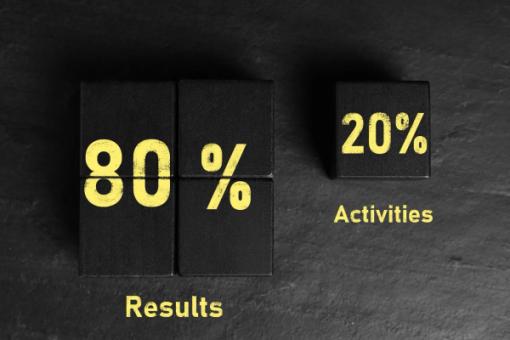
In the late 1800s, Italian economist Vilfredo Pareto noticed something peculiar about his garden. Roughly 20 percent of his pea pods produced 80 percent of the peas. Curious, he looked at wealth distribution in Italy and found the same pattern. Twenty percent of the population owned about 80 percent of the land.
This 80/20 rule shows up everywhere. In business, 20 percent of customers typically generate 80 percent of revenue. In your closet, you probably wear 20 percent of your clothes 80 percent of the time. And in your life, a small number of activities produce the vast majority of your happiness, results, and growth.
The implications are profound. If most of your results come from a small number of inputs, then the single most powerful thing you can do is identify those inputs and double down on them. Everything else is noise disguised as productivity.
How to Apply the Pareto Principle Daily
- Audit your activities. List everything you spent time on last week. Circle the 2 or 3 activities that produced the most meaningful results. These are your vital few.
- Ruthlessly eliminate or delegate the rest. That does not mean ignoring responsibilities. It means finding ways to spend less energy on low-impact tasks so you can invest more in high-impact ones.
- Apply it to relationships. Which 3 to 5 people in your life energize you the most? Invest disproportionately in those relationships. Quality always beats quantity here.
- Apply it to goals. If you have ten goals, two of them probably matter more than the other eight combined. Focus there first and let the rest wait.
- Apply it to information. Of the dozen newsletters, podcasts, and social accounts you follow, which 2 or 3 actually change how you think or act? Unsubscribe from the rest. Your attention is too valuable to spend on low-signal content.
The things that matter most must never be at the mercy of the things that matter least. (Johann Wolfgang von Goethe)
Consider a real example. Sarah, a marketing manager, tracked her time for two weeks and discovered that 70 percent of her results (the campaigns that actually moved revenue) came from just two activities: writing email sequences and analyzing customer data. Everything else consumed most of her time but produced marginal returns. The meetings, the status updates, the social media scheduling. When she restructured her week to protect four hours every morning for those two activities, her team's results nearly doubled in one quarter.
A practical exercise: every Sunday evening, write down the three things that, if you accomplished them this week, would make everything else easier or less important. This is your Pareto shortlist. Protect those three things like your life depends on it. Because in a very real sense, the quality of your life does.
Principle 2: First Principles Thinking, Build From the Ground Up
Elon Musk gets a lot of press, but one thing he genuinely contributed to popular thinking is the concept of first principles reasoning. When SpaceX was getting started, existing rockets cost $65 million. Instead of accepting that price as fixed, Musk asked: "What are rockets actually made of? Aluminum, titanium, copper, carbon fiber. What do those raw materials cost on the commodity market?" The answer was roughly 2 percent of the rocket's price. The rest was tradition, inefficiency, and "that is just how it is done."
First principles thinking means breaking a problem down to its most fundamental truths and building your reasoning up from there, instead of reasoning by analogy (which is copying what everyone else does).
Most of us run our lives on analogies. We go to college because everyone goes to college. We buy houses because that is what adults do. We pursue promotions because that is what career success looks like. But what if those assumptions do not hold for your specific situation?
How to Apply First Principles Thinking
- Identify an assumption you have never questioned. "I need a degree to be successful." "I need to live in a big city." "I should save for retirement the traditional way."
- Break it down. What is the actual goal underneath this assumption? If the goal is "financial security," a degree is one path, but it is certainly not the only one.
- Rebuild from scratch. Given what you actually want, what is the most efficient path there? It might look nothing like the conventional route.
- Test your new approach. Start small, measure results, and adjust based on what you learn.
This does not mean being contrarian for the sake of it. Sometimes the conventional path is conventional because it works. But you should follow it by choice, not by default. The difference between intentional and unintentional living often comes down to whether you have examined your assumptions.
Take career planning as an example. The default script says: get a degree, land a job, climb the ladder, retire at 65. But first principles thinking asks a different question. What do I actually want from my career? If the answer is creative freedom and location independence, the traditional corporate path might be the worst option, even though everyone around you is following it. Maybe freelancing, building a small online business, or combining part-time work with a passion project gets you closer to your actual goal in half the time.
The philosopher Socrates built his entire life around this idea. He would stop people in the streets of Athens and ask them why they believed what they believed. Most could not answer. They had inherited their beliefs from family, culture, and tradition without ever questioning them. Two thousand years later, most of us are still doing the same thing.
A great question to ask yourself monthly: "What am I doing right now simply because I have always done it, not because it is the best approach?" That single question can unlock more clarity than a dozen productivity books.
Principle 3: The Compound Effect, Small Choices Create Massive Results
Albert Einstein reportedly called compound interest "the eighth wonder of the world." Whether he actually said that is debatable, but the principle is not. Small, consistent actions accumulate into extraordinary results over time.
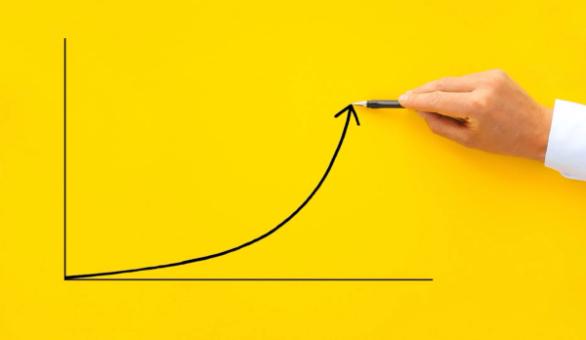
Here is the math that most people miss. If you improve by just 1 percent every day, you will be 37 times better after one year. If you decline by 1 percent every day, you will be nearly at zero. The difference between those two paths is invisible on any given day, but catastrophic over time.
This is why intentional living is so powerful and so difficult. The right choice and the easy choice often look identical in the short term. Eating a salad instead of a burger does not matter today. Reading for 30 minutes instead of scrolling does not matter today. But do either consistently for a year, and the gap becomes enormous.
The Compound Effect in Practice
Darren Hardy, in his book The Compound Effect, tells a story about three friends. One makes small positive changes: reads ten pages a day, walks 30 minutes, cuts 125 calories. Another changes nothing. A third makes small negative changes: an extra drink, a few more hours of TV, slightly larger portions. After five months, no visible difference. After ten months, barely noticeable. After 25 months, the gap is life-changing.
The math is staggering. Reading ten pages a day means roughly 3,650 pages per year, which adds up to about 12 to 15 books. Over five years, that is 60 to 75 books. The person who reads zero books and the person who reads 75 books on business, psychology, health, and relationships are living in fundamentally different realities. Yet on any single day, the difference between reading ten pages and reading zero pages is invisible.
This principle also works in reverse, which is why it demands respect. Small negative habits compound too. Spending just $5 per day on unnecessary purchases adds up to $1,825 per year and over $9,000 in five years, not counting what that money could have earned if invested. Scrolling social media for 45 extra minutes daily steals 273 hours per year. That is roughly 34 full eight-hour days. More than a month of productive time, vanished into a screen.
- Choose one keystone habit and commit to it for 90 days. Not three habits. One.
- Track it visually. A simple streak calendar on your wall is more powerful than any app because you see it constantly.
- Protect the streak, not the intensity. On bad days, do the minimum viable version. One pushup, one paragraph, five minutes of practice. The streak is what matters.
- Be patient with results but impatient with action. You cannot control outcomes, but you can control whether you show up.
You do not rise to the level of your goals. You fall to the level of your systems. (James Clear)
Principle 4: Leverage, Do More With Less
Archimedes said, "Give me a lever long enough and a fulcrum on which to place it, and I shall move the world." Leverage is the art of getting disproportionate results from your inputs.
In the modern world, leverage comes in four forms: labor (other people working for you), capital (money working for you), code (software working for you), and media (content working for you while you sleep). The last two, code and media, are particularly powerful because they scale without additional cost.
But leverage applies to your personal life too, not just business. Every time you create a system, template, checklist, or routine that automates a decision, you are applying leverage. You make the decision once and benefit from it hundreds of times.
Personal Leverage Strategies
- Decision templates. Create rules for recurring decisions. "If I get invited to an event and my first reaction is not 'absolutely yes,' the answer is no." That one rule saves you dozens of agonizing decisions per year.
- Batch processing. Cook meals for the week on Sunday. Answer emails in two blocks instead of all day. Group similar tasks to reduce the mental cost of context switching.
- Invest in skills that multiply. Writing, public speaking, and negotiation are leverage skills. They amplify everything else you do across every area of life.
- Use technology deliberately. Automate bill payments, use calendar blocking, set up recurring reminders for important but forgettable tasks. Let machines do what machines do best.
- Build once, benefit forever. A morning routine checklist. A packing list. A meal rotation. These small systems free up enormous mental energy over time.
The key insight about leverage is this: the best use of your time is almost never doing more work. It is building systems that reduce the work required. An hour spent creating a good system can save you hundreds of hours over its lifetime.
Warren Buffett is a master of leverage. He does not work 18-hour days. He reads for five to six hours daily and makes a handful of high-leverage decisions each year. Those few decisions, backed by decades of accumulated knowledge, produce billions in returns. You do not need to be Buffett, but the principle applies at every scale. A freelancer who creates a client onboarding template saves 30 minutes per new client. Over 50 clients, that is 25 hours reclaimed from a single hour of upfront work.
Ask yourself: where in my life am I trading time for results at a one-to-one ratio, when I could build something that creates a one-to-many return? That question alone can reshape how you invest your most valuable resource.
Principle 5: Systems Thinking, See the Whole Board
Most people try to solve problems by attacking symptoms. Your energy is low, so you drink more coffee. You are gaining weight, so you try a crash diet. Your relationship is strained, so you plan a vacation. These are band-aids on bullet wounds.
Systems thinking means looking at the interconnected web of causes and effects, not just the symptom in front of you. It asks: "What is the underlying system that is producing this result? And how can I change the system, not just the output?"
Peter Senge, who popularized systems thinking in his book The Fifth Discipline, describes a concept called "shifting the burden." When you treat a symptom instead of the root cause, you become dependent on the treatment. Drink coffee to compensate for poor sleep, and you need more coffee, which further disrupts your sleep. The system reinforces itself in a vicious cycle.
Applying Systems Thinking to Your Life
- Map your feedback loops. Pick a problem area in your life and trace the chain of cause and effect. Low energy leads to skipping workouts, which leads to worse sleep, which leads to lower energy. The loop reveals the intervention point.
- Identify the leverage point. In the example above, the leverage point might be sleep. Fix sleep and the entire loop improves. Donovan Livingston calls these "acupuncture points" in a system.
- Design for the system, not the moment. Instead of relying on willpower to eat healthy at dinner, design your kitchen so healthy options are the easiest to reach. Change the environment, not the behavior.
- Watch for delayed effects. In systems, cause and effect are often separated by time. The decisions you make this month might not show results for six months. This is why people give up on good habits. They expect immediate feedback from a delayed system.
A practical tool: when facing a recurring problem, draw a simple causal loop diagram. Write the problem in the center, then draw arrows showing what causes it and what it causes. You will almost always discover that you have been treating a downstream symptom instead of an upstream cause.
Here is a real-world example of systems thinking in action. Maria kept trying to eat healthier, but she always failed by dinnertime. She tried meal plans, calorie counting, and willpower. Nothing stuck. When she mapped the system, she discovered the real chain: she skipped breakfast because she woke up late, which made her ravenous by noon, which led to a heavy lunch, which made her sluggish by 3 PM, which led to caffeine and sugar for energy, which disrupted her sleep, which made her wake up late the next morning. The fix was not a better diet plan. It was a consistent bedtime. One upstream change fixed the entire downstream cascade.
Today we are faced with the pre-eminent fact that, if civilization is to survive, we must cultivate the science of human relationships, the ability of all peoples to live together and work together. (Franklin D. Roosevelt)
Principle 6: Energy Management, Your Most Finite Resource
Time management gets all the attention. Hundreds of books, thousands of apps, endless productivity hacks. But here is the dirty secret that productivity gurus rarely mention: you can have all the time in the world and still get nothing done if your energy is depleted.
Tony Schwartz, author of The Power of Full Engagement, argues that energy (not time) is the fundamental currency of high performance. And energy comes in four dimensions: physical (sleep, nutrition, exercise), emotional (relationships, stress management, joy), mental (focus, creativity, learning), and spiritual (purpose, meaning, values alignment).
When any one of these dimensions is depleted, everything else suffers. You cannot think clearly when you are physically exhausted. You cannot be creative when you are emotionally drained. You cannot persist when you have lost connection to your purpose.
Managing Your Energy Deliberately
- Map your energy patterns. Track your energy levels every two hours for one week. You will discover predictable peaks and valleys. Schedule your most important work during peaks, and routine tasks during valleys.
- Protect your peak hours ruthlessly. If you do your best thinking from 9 to 11 AM, do not fill that window with meetings and email. This is your golden time. Treat it accordingly.
- Build recovery into your day. High performers do not work nonstop. They oscillate between intense focus and deliberate recovery. Take a real break every 90 minutes. Walk, stretch, breathe. Not social media scrolling.
- Audit energy drains. Certain people, activities, and environments deplete your energy disproportionately. Identify them and minimize exposure. This is not selfish. It is strategic.
- Invest in the physical foundation. Sleep 7 to 8 hours. Move your body daily. Eat real food. These are not optional wellness tips. They are the infrastructure your entire life runs on.
Consider the practical impact of energy awareness. Most people schedule their day based on external demands: meetings dictated by colleagues, errands dictated by store hours, exercise squeezed into whatever slot remains. An intentional approach flips this entirely. You build your schedule around your energy, not the other way around. Protect your peak hours for creative and strategic work. Schedule meetings during your natural afternoon dip when you would struggle with deep thinking anyway. Exercise during the transition between work and evening to reset your energy for the second half of your day.
The difference between managing time and managing energy is the difference between filling a calendar and fueling a life. Both matter, but energy management is the foundation that makes effective time management possible.
Manage your energy, not your time. Energy is the X factor in extraordinary productivity. (Tony Schwartz)
Principle 7: The Theory of Constraints, Find Your Bottleneck
Eliyahu Goldratt introduced the Theory of Constraints in his 1984 novel The Goal, and it changed how factories and businesses think about efficiency. The core idea is deceptively simple: every system has a bottleneck, and improving anything other than the bottleneck is a waste of effort.
Imagine a production line with five stages. If stage three can only process 50 units per hour while every other stage handles 100, making stages one, two, four, and five faster is pointless. The system can never produce more than 50 units per hour until you fix stage three.
Your life works the same way. At any given time, there is one thing, one constraint, that limits your progress more than everything else. Maybe it is your health, your financial situation, a toxic relationship, a missing skill, or a mindset issue. Until you address that constraint, optimizing everything else yields minimal results.
Finding and Fixing Your Life Constraint
- Identify the bottleneck. Look at your goals across different life areas. Which one, if improved, would have the biggest positive ripple effect on everything else? That is likely your constraint.
- Exploit the constraint. Before trying to eliminate it, maximize what you can do within its limits. If your constraint is time, ruthlessly prioritize. If it is money, optimize every dollar.
- Subordinate everything else. Align your other activities to support the constraint. If your health is the bottleneck, restructure your schedule around sleep, exercise, and meals. Not around work.
- Elevate the constraint. Invest resources (time, money, energy, learning) directly into removing the bottleneck.
- Repeat. Once you fix the current constraint, a new one will emerge. This is normal. Life is a continuous process of identifying and addressing the next bottleneck.
The beauty of this principle is its clarity. Instead of trying to improve everything at once (which is how most people approach self-improvement), you focus all your energy on the one thing that matters most right now. It is strategic minimalism applied to personal growth.
Gary Keller captures this in his book The ONE Thing: "What is the one thing I can do such that by doing it, everything else will be easier or unnecessary?" That question is the Theory of Constraints translated into a daily practice. It forces you to identify the bottleneck and direct your energy there, instead of spreading yourself thin across a dozen improvement projects that compete for the same limited resources.
Most people resist this approach because it feels like they are neglecting important areas of their life. But the paradox is that focused attention on one constraint produces faster improvement across all areas than divided attention across many. Fix the foundation, and the entire structure becomes more stable.
The Five Traps of Unintentional Living
Before we talk about getting started, let us address the common traps that pull people back into autopilot mode. Being aware of them is half the battle.
Trap 1: The Busyness Illusion
Being busy feels productive, but busyness and effectiveness are not the same thing. In fact, they are often inversely related. The busiest people are frequently the least intentional. They fill every minute with activity to avoid the discomfort of asking whether those activities actually matter. If you find yourself constantly "busy" but never making progress on what truly counts, the busyness itself might be the problem.
Trap 2: Shiny Object Syndrome
Every week brings a new productivity system, a new app, a new framework. Constantly switching methods means you never go deep enough with any single approach to see real results. Pick a system and commit to it for at least 90 days before evaluating. The best system is the one you actually stick with, not the one with the most features.
Trap 3: Comparison as Strategy
Social media has turned other people's highlight reels into our benchmarks. But designing your life based on what worked for someone else is the opposite of first principles thinking. Their constraints, values, and circumstances are different from yours. Use others for inspiration, not imitation. Your life is a unique puzzle that requires a unique solution.
Trap 4: Perfectionism as Procrastination
Waiting for the perfect plan, the perfect time, or the perfect circumstances is just procrastination in a clever disguise. Imperfect action beats perfect planning every time. You will learn more from one month of messy execution than from six months of meticulous preparation. Done is better than perfect, and started is better than planned.
Trap 5: Ignoring the Emotional Foundation
All the productivity systems in the world cannot fix unresolved emotional issues. If you are carrying chronic stress, unprocessed grief, relationship conflict, or untreated anxiety, address those first. They are not distractions from the real work. They are the real work. No framework can outperform a broken foundation.
A Framework for Getting Started: The Intentional Living Kickstart
Theory without practice is just philosophy. Here is a concrete framework you can implement starting this week. It takes about two hours to set up and 15 minutes a day to maintain.
Step 1: The Life Audit (60 minutes)
Rate your satisfaction from 1 to 10 in each of these areas: health, relationships, career or work, finances, personal growth, fun and recreation, physical environment, and contribution or impact. Do not overthink it. Go with your gut feeling on each one.
Now look at the results. Which area scored lowest? Which area, if improved, would positively affect the most other areas? That intersection is your starting point, your current constraint.
Step 2: Define Your Vital Few (30 minutes)
Based on your life audit, identify three outcomes that would make the next 90 days meaningful. Not ten. Not five. Three. Write them down in specific, measurable terms. "Get healthier" becomes "Exercise four times per week and sleep seven hours per night."
Step 3: Design Your Keystone Systems (30 minutes)
For each of your three outcomes, define one daily or weekly system that will drive progress. A system is a repeatable action, not a goal. "Lose 10 pounds" is a goal. "Eat a protein-rich breakfast and walk 30 minutes after lunch" is a system.
- Make each system specific and small. The easier it is to start, the more likely you will do it consistently.
- Attach it to an existing habit. "After I pour my morning coffee, I will write in my journal for five minutes." This is habit stacking, and it dramatically increases follow-through.
- Define the minimum viable version. What is the absolute smallest version of this system? One pushup. One paragraph. One minute of meditation. That is your fallback for hard days.
Step 4: The Weekly Review (15 minutes every Sunday)
Every Sunday, ask yourself three questions:
- What worked this week? (Do more of this.)
- What did not work? (Adjust or eliminate.)
- What is my single most important focus for next week?
This weekly review is the meta-habit that keeps all your other habits alive. It forces you to reflect, adjust, and recommit. Without it, even the best systems eventually drift into irrelevance.
Step 5: The Daily Intention (2 minutes every morning)
Before checking your phone, email, or social media, answer one question: "What is the one thing that matters most today?" Write it down. This takes less than two minutes, but it reorients your entire day around what is actually important instead of what is merely urgent.
This simple practice might be the highest-leverage two minutes of your day. Research on implementation intentions (specific plans about when, where, and how you will act) shows that people who set a clear daily intention are two to three times more likely to follow through than people who rely on vague motivation. Your morning intention acts as a filter for everything that follows. When a new request or distraction appears, you can ask: "Does this serve my one thing for today?" If not, it can wait.
Step 6: The 90-Day Checkpoint
After 90 days of practicing this framework, do a full reassessment. Redo the life audit. Compare your scores. Celebrate the areas that improved and identify the new constraint that has emerged. Then set your next three outcomes and repeat the cycle.
Ninety days is long enough for the compound effect to produce visible results, but short enough to maintain urgency and motivation. Most people plan in years but fail in weeks. The 90-day cycle is the sweet spot. It is ambitious enough to drive meaningful change, but near enough to keep you focused and accountable.
The Long Game: Why Patience Is a Competitive Advantage
Here is the final truth about intentional living: it is a long game. You will not transform your life in a week or a month. The compound effect works in your favor, but it requires time.
In a world obsessed with overnight success stories and 30-day transformations, patience is a genuine competitive advantage. Most people start strong and quit when results do not materialize quickly. If you simply keep going (imperfectly, inconsistently, but persistently), you will outperform the vast majority of people who started with more talent, more resources, and more motivation than you.
The principles in this guide are not secrets. They are not hidden knowledge. They are available to everyone. The difference is that most people read about them and nod along, while a few people actually implement them.
There is a Japanese concept called kaizen, which means continuous improvement through small, incremental changes. It was originally used in manufacturing, but it applies beautifully to personal life. You do not need a dramatic overhaul. You need a series of small, intentional upgrades, consistently applied over time. One better decision today. One more conscious choice tomorrow. One principle applied this week. That is the path.
Greg McKeown, in Essentialism, writes that the word "priority" was singular for centuries. There was no plural. You could only have one priority. It was not until the 1900s that people started talking about "priorities," which is almost a contradiction in terms. If everything is a priority, nothing is. Intentional living is the practice of returning to the singular: what is my priority right now?
Be one of the few. Start with one principle. Apply it for a week. See what happens. Then add another. Build your system of intentional living one layer at a time, and trust the process.
Your life is the sum of your choices. Make sure they are actually yours.