The Simple Idea That Rewrites the Rules
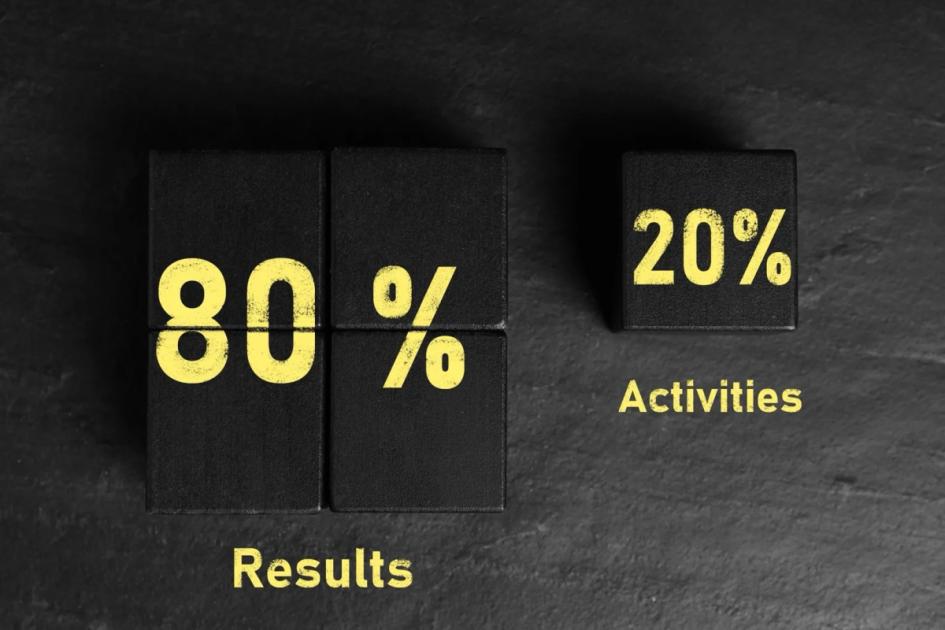
What if someone told you that most of the results in your life come from a tiny fraction of what you actually do? That roughly 20 percent of your efforts drive about 80 percent of your outcomes, across your career, your health, your finances, and your relationships?
It sounds almost too simple to be true. But this pattern, known as the Pareto Principle or the 80/20 rule, has been observed in economics, biology, software engineering, sports, and virtually every domain of human activity. Once you see it, you cannot unsee it. It fundamentally changes how you allocate your most precious resources: time, energy, and attention.
The best part? You do not need a PhD or a complex system to apply it. The 80/20 rule is one of the most practical, immediately actionable mental models you will ever encounter. In this guide, we will trace its origins, break down how it applies to every major area of your life, and give you a concrete framework to start using it today.
Where It All Started: Vilfredo Pareto and His Pea Pods
In 1896, an Italian economist named Vilfredo Pareto was studying wealth distribution in Italy. He noticed something curious: approximately 80 percent of the land was owned by roughly 20 percent of the population. Intrigued, he examined other countries and found remarkably similar patterns.
But the story gets even better. Legend has it that Pareto noticed the same imbalance in his own garden. About 20 percent of his pea pods were producing 80 percent of the peas. Nature itself seemed to follow this lopsided distribution.
Decades later, management consultant Joseph Juran stumbled upon Pareto's work and coined the term "the vital few and the trivial many." Juran applied the principle to quality control in manufacturing: a small number of defect types caused the majority of problems. Fix those few, and overall quality improved dramatically.
The 80/20 ratio is not a precise mathematical law. Sometimes it is 90/10, sometimes 70/30. The core insight is that inputs and outputs are almost never distributed equally. A small number of causes create a disproportionately large share of effects. This asymmetry is everywhere, hiding in plain sight.
The 80/20 Rule in Business and Career
If you work in any professional capacity, the Pareto Principle is your secret weapon. Consider these patterns that show up again and again:
- 20 percent of clients generate 80 percent of revenue. Almost every business owner who runs the numbers discovers this. A handful of key accounts drive the majority of income, while the long tail of small clients consumes disproportionate time and energy.
- 20 percent of products account for 80 percent of sales. Amazon, Apple, and your local coffee shop all experience this. A few bestsellers carry the business.
- 20 percent of your work tasks produce 80 percent of your value. The strategic presentation that lands a new client matters more than the fifty routine emails you sent that week.
- 20 percent of employees often drive 80 percent of innovation. Every company has a small core of people who generate most of the ideas, solve the hardest problems, and push things forward.
The implication is both liberating and uncomfortable. Liberating because it means you do not need to do everything well to succeed. You just need to identify and excel at the vital few. Uncomfortable because it means a lot of what you are currently doing probably does not matter very much.
A marketing director named James discovered this firsthand. He was working 60 hour weeks, managing twelve different marketing channels, attending every meeting, and responding to every Slack message. When his company forced a time audit, the data was stark: two channels (email marketing and strategic partnerships) generated 78 percent of qualified leads. The other ten channels combined produced the remaining 22 percent. He was spending roughly equal time on all twelve.
When James restructured to spend 60 percent of his time on those two high-impact channels, leads actually increased while his working hours dropped. He was doing less and achieving more. The Pareto Principle in action.
The 80/20 Rule in Health and Fitness
The fitness industry thrives on complexity. New diets, new supplements, new workout routines, new gadgets. There is always something new to buy or try. But the Pareto Principle cuts through the noise with brutal clarity.
- Sleep and basic nutrition account for roughly 80 percent of your health outcomes. No supplement, biohack, or fancy workout program can compensate for consistently poor sleep and a bad diet.
- A few compound exercises (squats, deadlifts, bench press, rows, overhead press) build 80 percent of your strength and muscle. You could spend hours on isolation exercises and machines, or you could do five fundamental movements and get most of the results.
- Walking consistently delivers roughly 80 percent of the cardiovascular benefits most people need. You do not have to run marathons. Thirty minutes of daily walking transforms your health.
- Eliminating a few bad habits (excessive sugar, heavy drinking, chronic sitting, smoking) produces more health improvement than adding ten new "healthy" habits.
Dr. Peter Attia, one of the most respected voices in longevity medicine, frequently emphasizes this point. He argues that the basics (sleep, exercise, nutrition, and emotional health) account for the overwhelming majority of longevity outcomes. The exotic interventions that get all the media attention account for a tiny fraction. People obsess over whether to take resveratrol or NMN while sleeping five hours a night and eating processed food for every meal.
The greatest gains in health come not from adding complexity, but from mastering the fundamentals that most people neglect.
A useful exercise: list every health-related habit and activity in your life. Now circle the two or three that, if you did them consistently, would make the biggest difference. For most people, the list looks something like this: sleep seven to eight hours, move your body daily, and eat mostly whole foods. That is it. That is your 20 percent. Everything else is optimization on top of an already solid foundation.
The 80/20 Rule in Relationships
This is where the Pareto Principle gets personal, and potentially life-changing. Think about the people in your life. All of them. Family, friends, colleagues, acquaintances, social media connections.
Now ask yourself: which five to seven people bring you the most joy, support, growth, and genuine connection? Those are your vital few. Research consistently shows that the quality of our close relationships is the single strongest predictor of happiness, health, and longevity. The Harvard Study of Adult Development, running for over 80 years, found that the warmth of relationships was the greatest predictor of life satisfaction. Not wealth, not fame, not career achievement.
Yet most people spread their social energy thin. They maintain dozens of shallow connections, attend events out of obligation, and scroll through hundreds of social media profiles while neglecting the handful of relationships that actually matter.
- Identify your vital few relationships. The people who energize you, challenge you, and genuinely care about your wellbeing.
- Invest disproportionately in those relationships. Schedule regular one-on-one time. Reach out first. Be present when you are with them. Go deeper instead of wider.
- Reduce time and energy spent on draining relationships. This is not about being cruel. It is about being honest. Some relationships are obligations, not investments. Minimize the energy they consume.
- Apply 80/20 within relationships too. In any partnership, a few key behaviors (active listening, expressing gratitude, showing up during hard times) account for most of the relationship quality. Focus on those behaviors instead of grand gestures.
Robin Dunbar, the British anthropologist, found that humans can maintain about 150 social connections but only about five close, intimate relationships. Those five are your 20 percent. They deserve 80 percent of your social energy.
The 80/20 Rule in Time Management
Here is where the rubber meets the road for most people. You have 24 hours in a day, 168 hours in a week, roughly 4,000 weeks in a lifetime. How you allocate those hours determines the shape of your life. And the Pareto Principle offers the sharpest lens for making that allocation intentional.
Start by asking a deceptively simple question: of all the things you did last week, which two or three activities produced the most meaningful results? Not the most activity. Not the most busyness. The most actual, tangible, meaningful outcomes.
For most knowledge workers, the answer tends to cluster around a few activities: deep focused work on a key project, a critical conversation with a teammate or client, or a strategic decision that set the direction for weeks to come. Everything else (the meetings, the emails, the administrative tasks, the context switching) is noise. Necessary noise, perhaps, but noise nonetheless.
The Daily 80/20 Audit
Here is a practical framework you can start using tomorrow morning:
- Every morning, write down your top three tasks. These are your 20 percent, the activities that will drive 80 percent of your progress today.
- Block your first 90 to 120 minutes for the most important of those three. Before email, before meetings, before anyone else's agenda has a chance to hijack yours.
- Batch the remaining low-impact tasks. Group emails into two blocks. Cluster meetings in the afternoon. Handle administrative work in your lowest energy period.
- At the end of each day, ask: did I spend most of my energy on my vital few? If not, what got in the way? This five minute review creates a feedback loop that sharpens your prioritization over time.
The late Peter Drucker, widely considered the father of modern management, put it this way: "There is nothing so useless as doing efficiently that which should not be done at all." The 80/20 rule is not about doing things faster. It is about doing the right things in the first place.
Finding Your Vital Few: A Step by Step Process
The biggest challenge with the Pareto Principle is not understanding it. It is applying it to your own life. Here is a process for identifying your personal 20 percent:
- Conduct a time audit. For one week, track how you spend every hour. Use a simple spreadsheet or a time tracking app. Do not judge, just observe.
- Categorize your activities. Group them into buckets: deep work, meetings, email, administrative tasks, health, relationships, learning, entertainment.
- Rate each category on impact. On a scale of 1 to 10, how much does this category contribute to your most important goals?
- Compare time spent versus impact. You will almost certainly find a massive mismatch. Activities consuming 60 to 70 percent of your time may rate a 3 or 4 on impact, while activities consuming 10 to 15 percent of your time rate an 8 or 9.
- Restructure ruthlessly. Increase time on high-impact activities. Reduce, delegate, or eliminate low-impact ones.
This audit can feel uncomfortable. Most people discover they spend the majority of their day on activities that contribute very little to their actual goals. But that discomfort is the catalyst for change.
Common Misapplications to Avoid
The Pareto Principle is powerful, but it is frequently misunderstood. Here are the traps to watch for:
- The numbers do not have to add up to 100. People often assume that 80 + 20 = 100, which means inputs and outputs should balance. They do not. You might find that 10 percent of your efforts produce 90 percent of results. The point is the asymmetry, not the specific numbers.
- It does not mean you should ignore the 80 percent entirely. Some low-impact tasks are still necessary. You still need to file taxes, respond to emails, and keep your house from becoming a disaster zone. The goal is to minimize time spent on these, not to eliminate them.
- It is not an excuse for cutting corners. Saying "I only need to do 20 percent of the work" is a misapplication. The principle is about identifying which 20 percent of activities produce the most value, not about doing 20 percent of every task.
- Beware of applying it too rigidly to people. Saying "20 percent of employees produce 80 percent of results, so fire the rest" is dangerous and wrong. People are not static inputs. The right environment, training, and leadership can shift anyone's contribution.
- Do not use it to justify neglecting important but non-urgent activities. Relationship building, exercise, learning, and reflection may not show immediate returns but compound enormously over time. They belong in your vital few, even if the payoff is delayed.
The 80/20 Principle is not a magic formula. It is an observation about the typical pattern of unbalanced outputs that we can verify and then use to reshape our lives. (Richard Koch)
Your 80/20 Daily Application Framework
Let us put everything together into a framework you can start using this week. No apps required, no complicated system to learn. Just a few deliberate practices.
Weekly Setup (Sunday Evening, 15 Minutes)
- Review last week. What were the two or three biggest wins? What activities produced them? Write these down.
- Identify this week's vital few. What are the three outcomes that, if achieved, would make this week a success?
- Pre-commit your time. Block time on your calendar for those three outcomes before anything else gets scheduled.
- Identify one thing to stop doing. What low-impact activity consumed too much time last week? How can you reduce or eliminate it?
Daily Execution (Every Morning, 5 Minutes)
- Write your top three tasks. Connected to your weekly vital few.
- Star the single most important one. Do that first.
- Protect your peak energy hours for that starred task. Everything else works around it.
Monthly Review (End of Month, 30 Minutes)
- Audit your time allocation. Where did your hours actually go? Does the allocation match your priorities?
- Identify patterns. Which activities consistently produce the most results? Which consistently waste time?
- Adjust your vital few. Your 20 percent may shift as circumstances change. Update accordingly.
The beauty of this framework is its simplicity. You are not trying to optimize every minute of every day. You are just making sure that the most important things get the most attention. Over weeks and months, this small shift in allocation produces enormous differences in outcomes.
The Bigger Picture: Why 80/20 Thinking Matters
At its core, the Pareto Principle is about respecting the asymmetry of life. Not all actions are equal. Not all relationships are equal. Not all hours are equal. And pretending otherwise (treating everything as equally important) is the fastest path to burnout and mediocrity.
When you internalize the 80/20 mindset, you start asking different questions. Instead of "How can I get more done?" you ask "What should I even be doing?" Instead of "How can I manage all of this?" you ask "Which of this actually matters?" Instead of "How can I squeeze more hours from my day?" you ask "How can I make the hours I have count for more?"
These are fundamentally different questions, and they lead to fundamentally different lives. The Pareto Principle does not promise that life will be easy. But it does promise that your effort will be pointed in the right direction. And that is the difference between being busy and being effective.
Start this week. Identify your vital few. Protect them fiercely. And watch what happens when you stop trying to do everything and start doing what actually matters.